Name: Amanda C. Bauch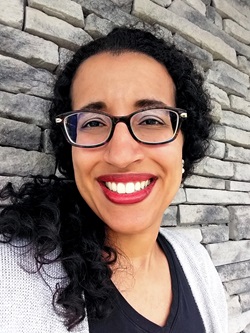
Website URL:
What services do you offer?
My primary services are ghostwriting/collaborative writing, developmental editing, coaching, and evaluating manuscripts. However, I have experience in many other areas (e.g., instructional design), and I’m always happy to talk to authors about how I can support their work.
Who are your ideal clients?
My ideal clients are those who have a strong message and a compelling story to share with the world. Those who understand and value the power of collaboration, when everyone involved brings their strengths to the process and the page. And those who understand that being an author isn’t necessarily the same thing as being a writer and/or editor—and therefore, they’re willing to invest in the professional support they need.
How did you get started in your business?
Until the day my grandmother died, she carried a poem I wrote, tucked in her wallet. She said that she always knew I’d be a writer. And if you count me editing my older sister’s high school term papers, when I was in elementary school, then I’ve been in the editing “business” for most of my life!
But from a practical, career standpoint, I truly got my start as a writer and editor after receiving my MFA in creative writing. In addition to starting an adjunct teaching and instructional design career, my work was published both online and in print, and I delved into all kinds of editing—from literary journals to self-publishing and academic publishing. When I left academia, I focused more fully on my freelancing career, building my projects list and gaining more experience.
Several years later, I received the opportunity of a lifetime: to help HarperCollins launch a new nonfiction imprint, HarperCollins Leadership, as an editor. After a couple of years, I transitioned to another new nonfiction imprint, Harper Horizon. I can’t overstate how much those experiences meant to me, personally and professionally, and how they positioned me to be more successful in this latest iteration of my freelancing career.
What are some common issues you help your clients with?
The support I provide varies, by client as well as by project. No two projects and clients are alike. Therefore, every situation must be customized for that specific client. That’s especially true because I work with clients who are on different paths: being traditionally published, working with hybrid publishers, and self-publishing.
Regardless of the type of project or publishing method, authors tend to have similar needs.
As a writer, the main issue I help mitigate is one we all face: lack of time. Most of my clients aren’t full-time writers—lots of them are running businesses, working demanding jobs, raising families, and so forth. For them to be able to outsource the writing of their content is a huge relief. I do as much of the heavy lifting as possible, so my clients can live their lives, confident that the book is moving forward.
As an editor, a crucial part of my work involves helping authors become more self-aware. Even I, as a writer-editor, need an editor to prevent me from becoming too myopic about my work. We all have what I refer to as “writerly tendencies,” and a skilled editor can help you become a better editor of your own work.
As a coach, I serve as my authors’ biggest cheerleader. (I sometimes jokingly refer to myself as an “emotional support human.” Cheeky but true!) Writing can be an isolating and discouraging pursuit, so having a companion to provide encouragement—and accountability—along the way makes all the difference.
Can you recommend any books or resources to other members?
I’m a bit of a craft-book junkie, so it’s hard to narrow down the list! Here are a few of my favorites:
- Living to Tell the Tale by Jane Taylor McDonnell
- On Writing Well by William Zinsser
- Tell It Slant by Brenda Miller & Suzanne Paola
- Writing as a Way of Healing by Louise DeSalvo
- Writing Down the Bones by Natalie Goldberg
- Writing the Memoir by Judith Barrington
The “Writing Creative Nonfiction” Great Courses is also an excellent resource.
Yet more than books and resources, the single most important thing writers can do to improve their craft is to read great books, especially in their genre.
Read not only for the sheer joy of consuming the words on the page but also with a forensic mindset. When a sentence soars or a scene steals your breath away, analyze why that is.
Sure, getting an MFA is one way to hone your craft, but anyone with a library card already has access to the best writing teachers in the world.
Can you offer one “pro tip” to our members?
Writing and publishing a book is one of the most exciting and daunting pursuits a person can undertake. So I encourage anyone who’s on this journey to extend grace to themselves, as well as to those who have joined them on the path. Books come into the world in many different ways, and it’s a very human process—human beings, in all their complexity, are involved every step of the way. Oftentimes, you’ll experience setbacks and disappointments, but when you’re able to operate in a spirit of grace for all involved, it infuses the process with more joy. And that’s one of my ultimate goals as a professional: to help my clients enjoy writing and publishing a book!
What do you enjoy most about what you do?
I often say, “Although we’re in the publishing business, we’re really in the relationship business.” The people I’ve met and the amazing projects I’ve worked on over the past twenty-plus years have blessed me in infinite ways. These relationships have sustained me in the best and worst of times, and many of my authors have remained dear friends of mine.
It’s an immense honor and humbling responsibility to steward someone’s story. And it’s something I hope I never take for granted.
What’s next for you?
I’m always on the hunt for meaningful projects to challenge me, inspire my creativity, and bring joy into my life. In addition to working with clients, I’m hoping to start publishing my own writing again in the near future. I have several projects in various stages of development (mostly nonfiction, but some fiction too), and it’s a matter of finding a balance between dedication to my clients and to my own work. I’m grateful for organizations like the Nonfiction Authors Association, which support me as both a freelancer and an author and provide invaluable resources and community.
If you like this blog post, you’ll love our Author Toolkit for traditional publishing. It includes checklists, templates, worksheets and more. Check it out!